The Female Barber
Aarhus, Denmark
2020
Aarhus, Denmark
2020
References
Goffman, E. (1990 ). The presentation of self in everyday life. England: Peguine Books 1990.
Jackson, M. (2013). The wherewithal of life: Ethics, migration, and the question of well-being: University of California Press.
Kapferer, B. (2013). Montage and time: Deleuze, cinema, and a Buddhist sorcery rite. Transcultural Montage, 20-39.
Mattingly, C. (2014). Moral laboratories: Family peril and the struggle for a good life: Univ of California Press.
Suhr, C., & Willerslev, R. (2013). Introduction: Montage as an Amplifier of Invisibility. In Transcultural Montage (pp. 1-15): Berghahn Books.
Collaborators:
︎︎︎ Barberritas Little Place
Goffman, E. (1990 ). The presentation of self in everyday life. England: Peguine Books 1990.
Jackson, M. (2013). The wherewithal of life: Ethics, migration, and the question of well-being: University of California Press.
Kapferer, B. (2013). Montage and time: Deleuze, cinema, and a Buddhist sorcery rite. Transcultural Montage, 20-39.
Mattingly, C. (2014). Moral laboratories: Family peril and the struggle for a good life: Univ of California Press.
Suhr, C., & Willerslev, R. (2013). Introduction: Montage as an Amplifier of Invisibility. In Transcultural Montage (pp. 1-15): Berghahn Books.
Collaborators:
︎︎︎ Barberritas Little Place
The Film
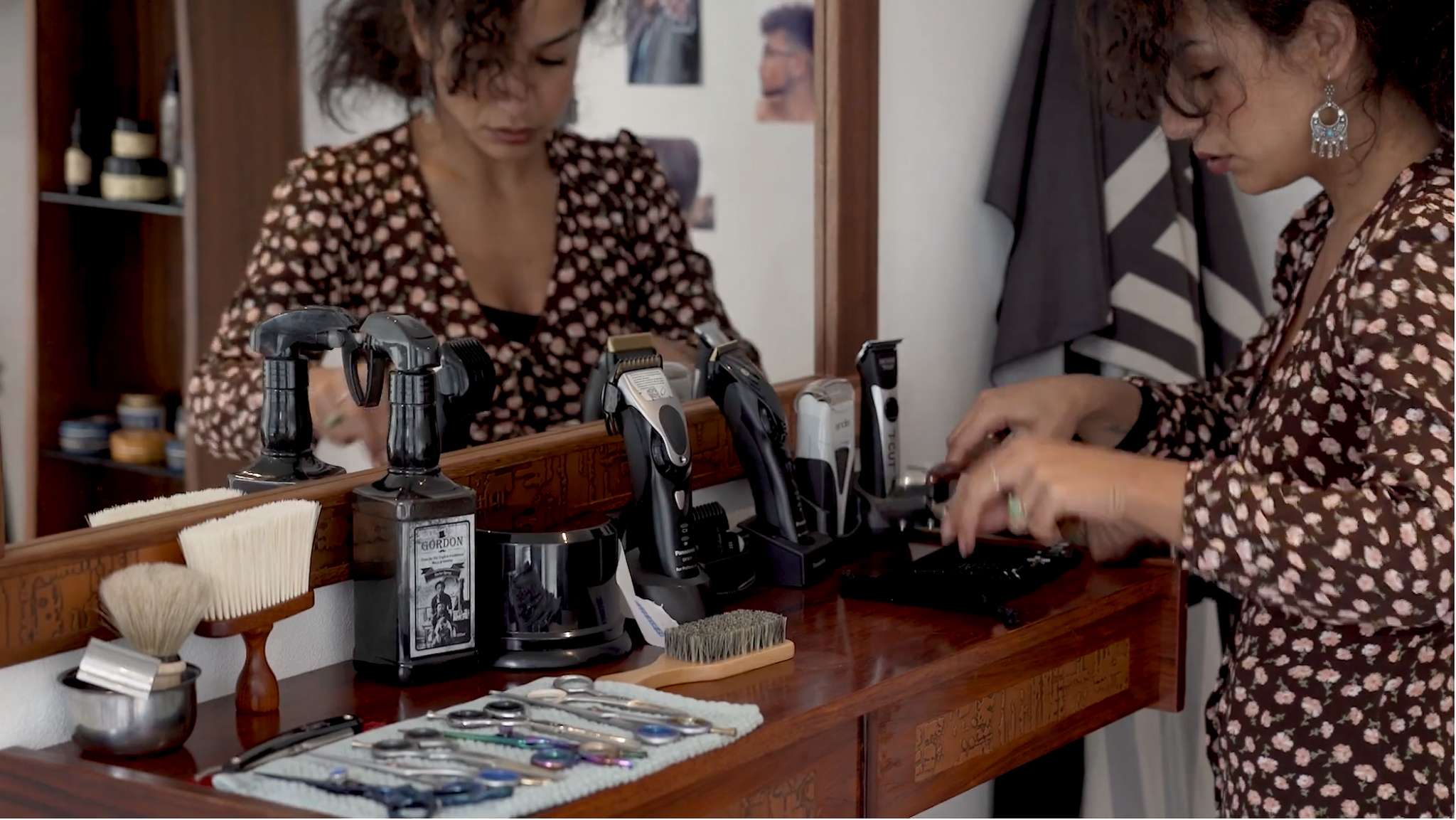
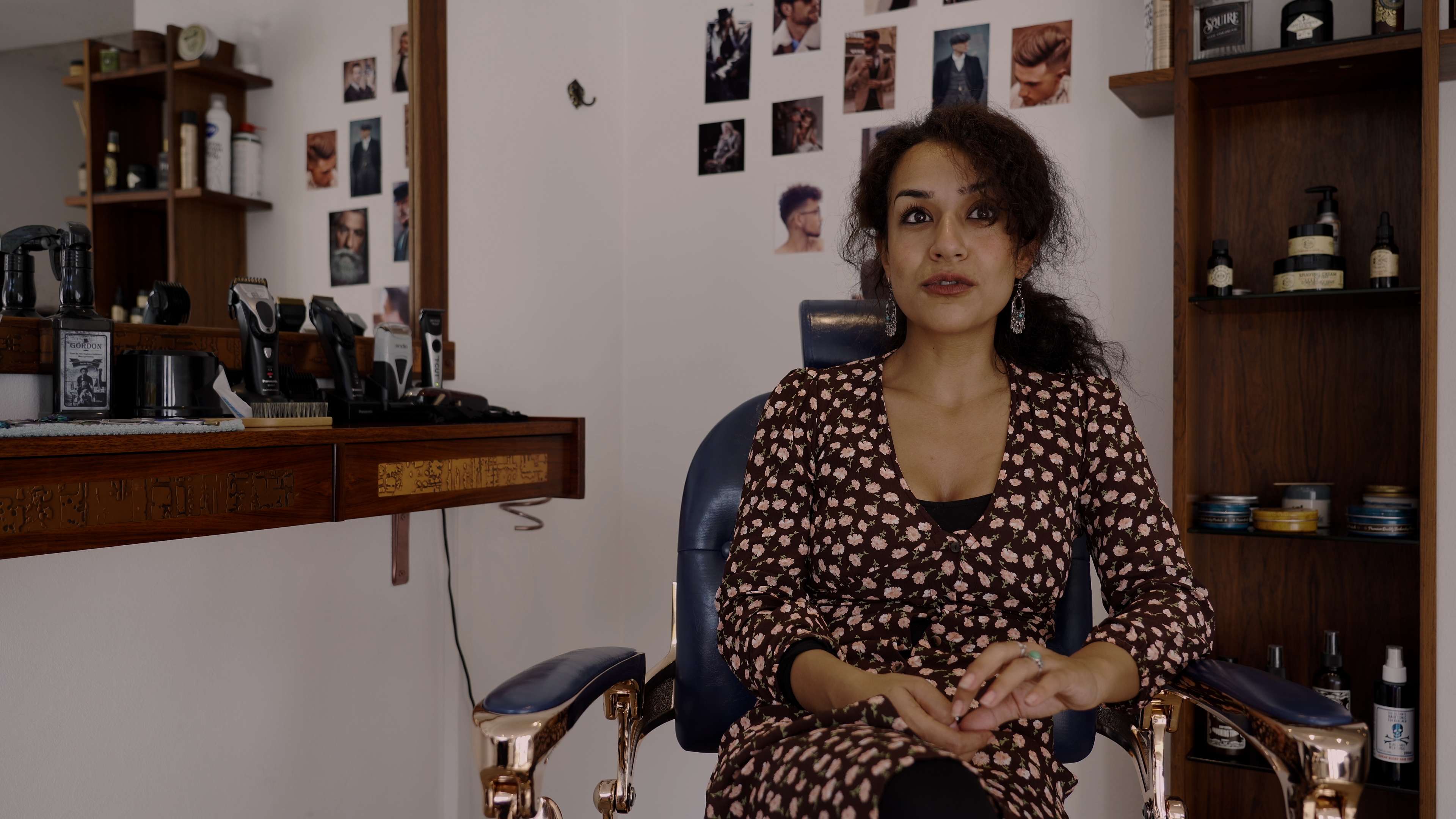
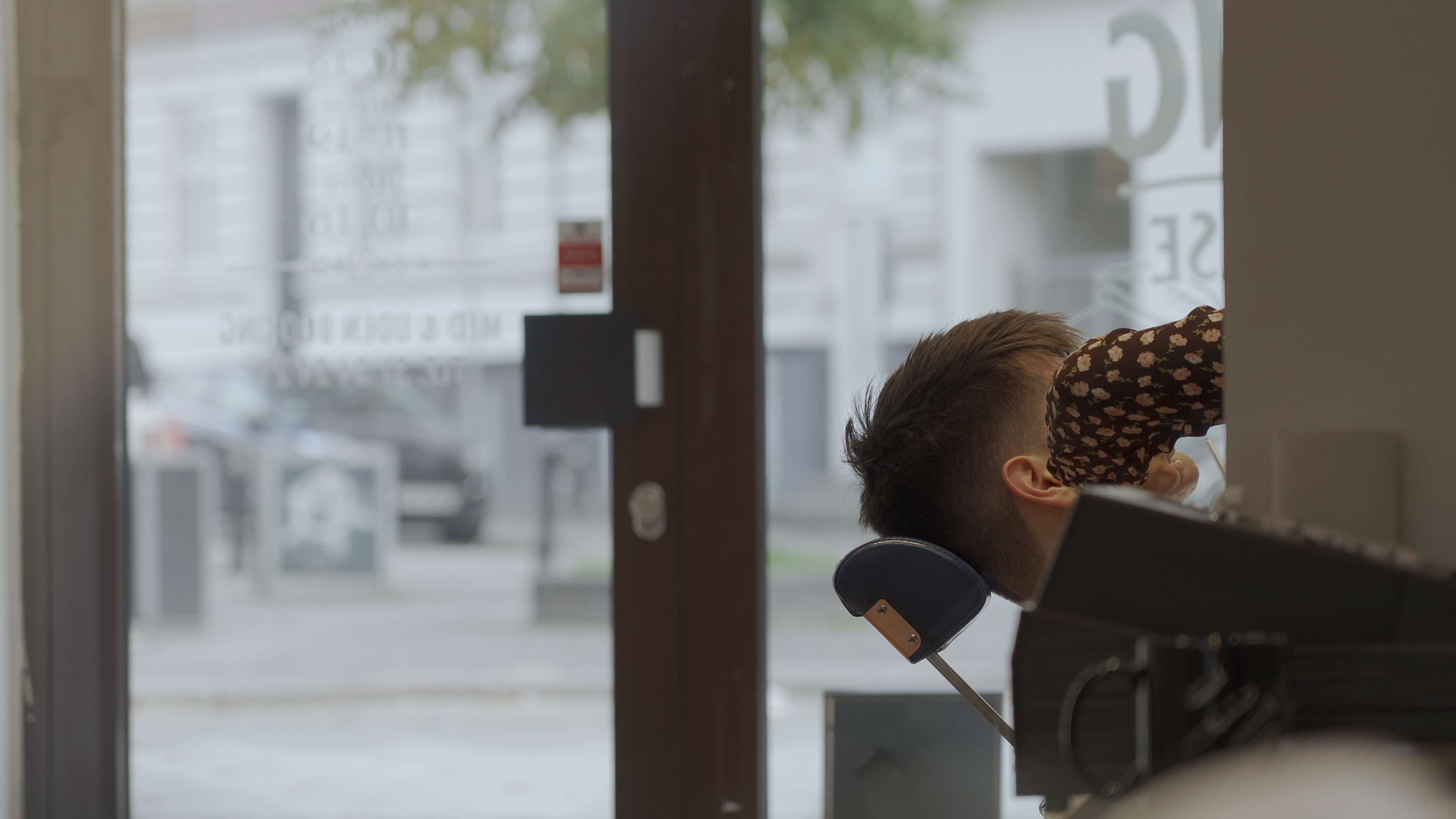
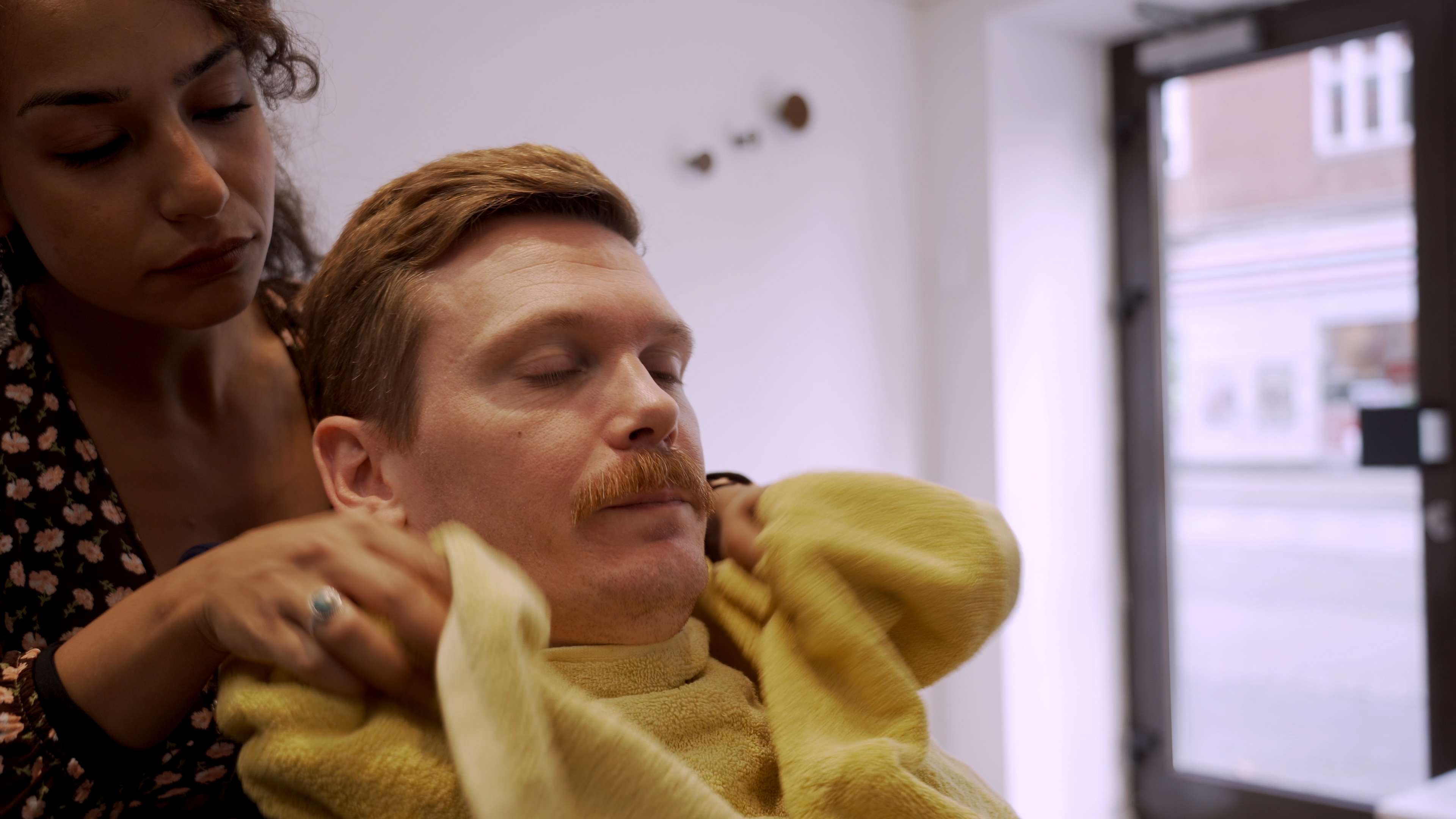
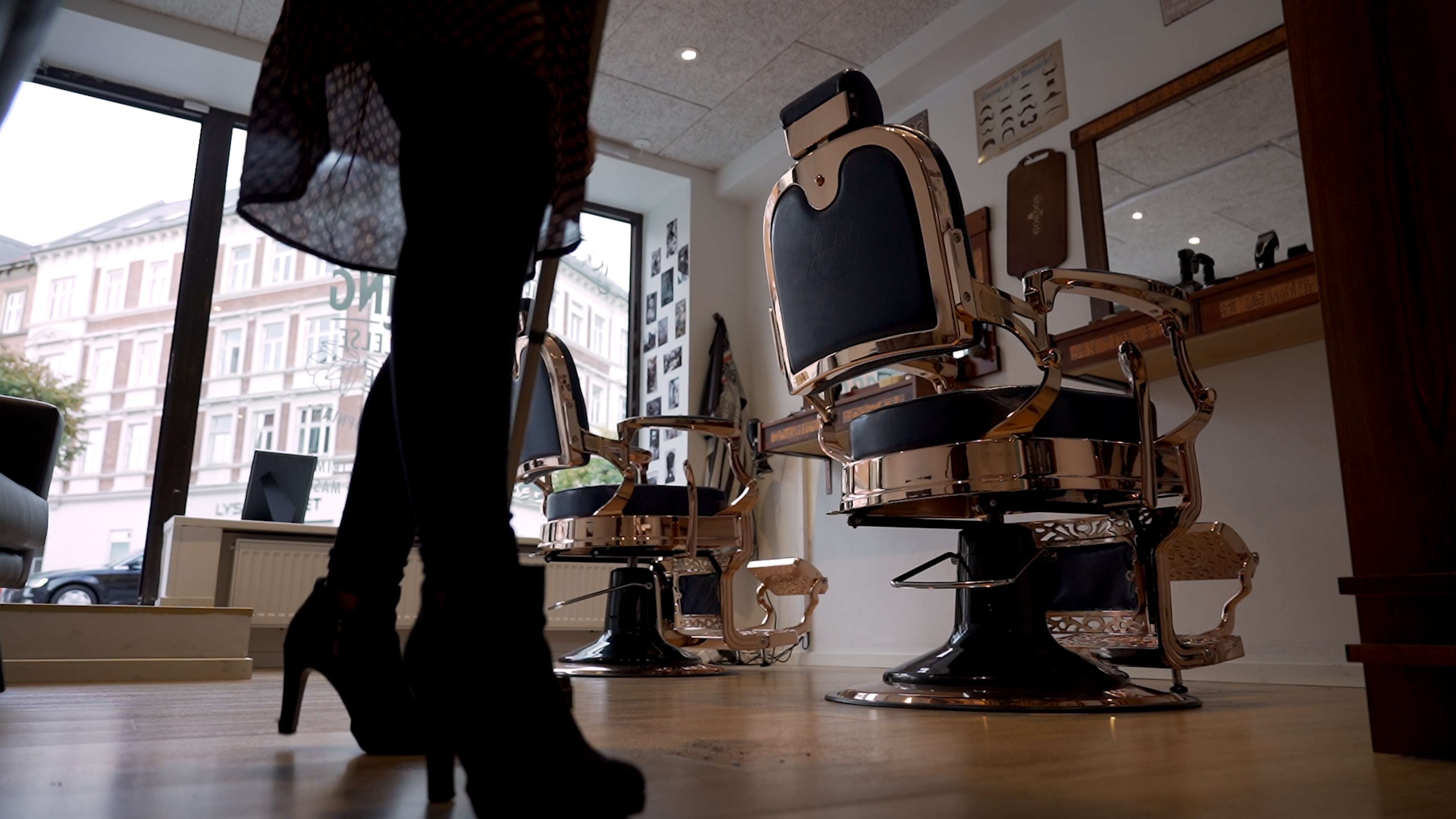
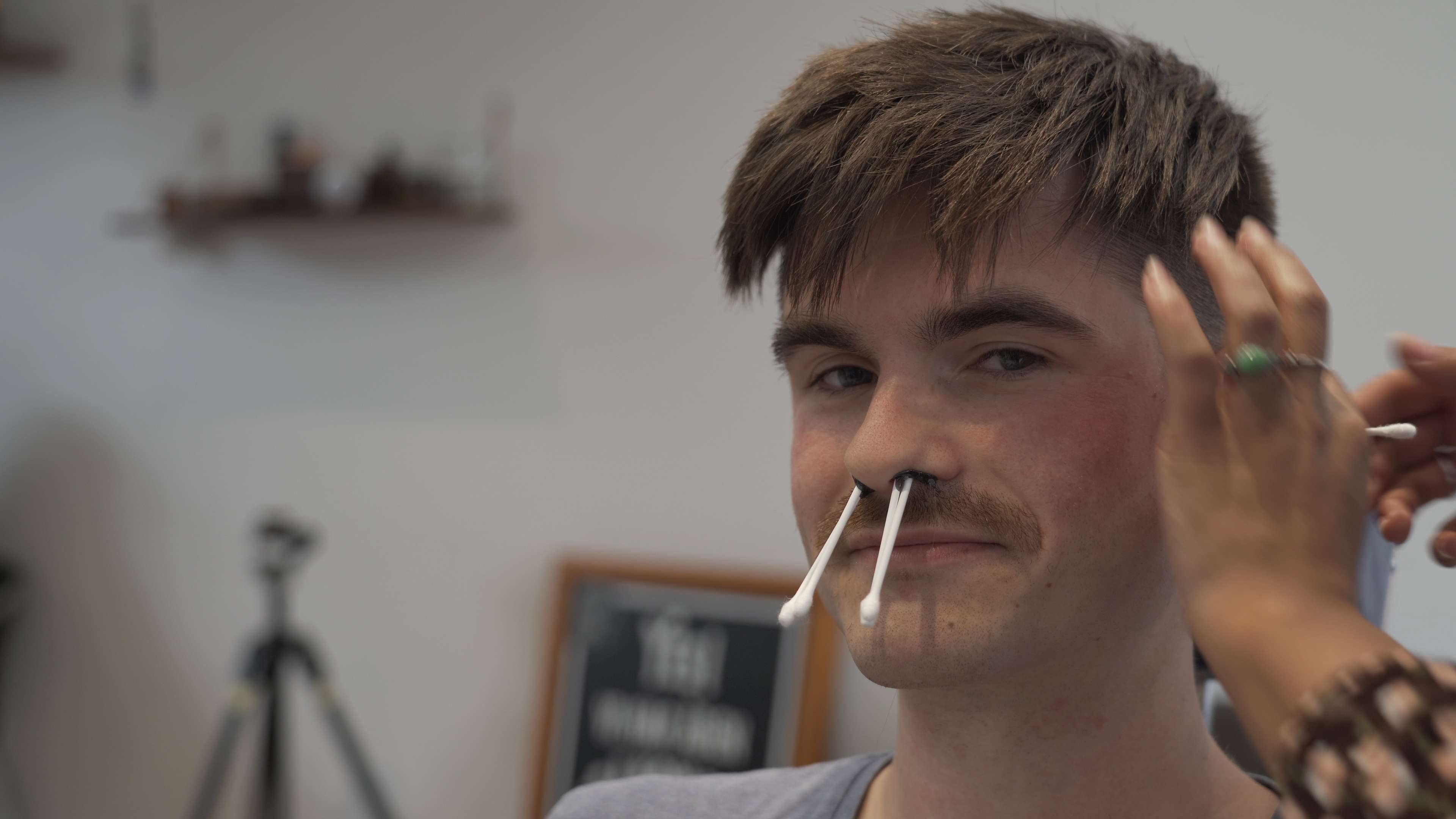
This short student film is a portrait of Dina, a young female barber originally from Iraq. She co-owns and runs a barbershop located on Frederiksallé in Aarhus C – Barberitta’s Little Place – together with her sister. Through the filmed interviews and conversations between myself and Dina, the film also develops as an expose of the shop, the relationship between the two sisters, and their notions of the good life (e.g. Jackson, 2013; Mattingly, 2014). In addition, this paper explicates in brief summary the personal motivations that initiated the collaboration between myself and Dina.
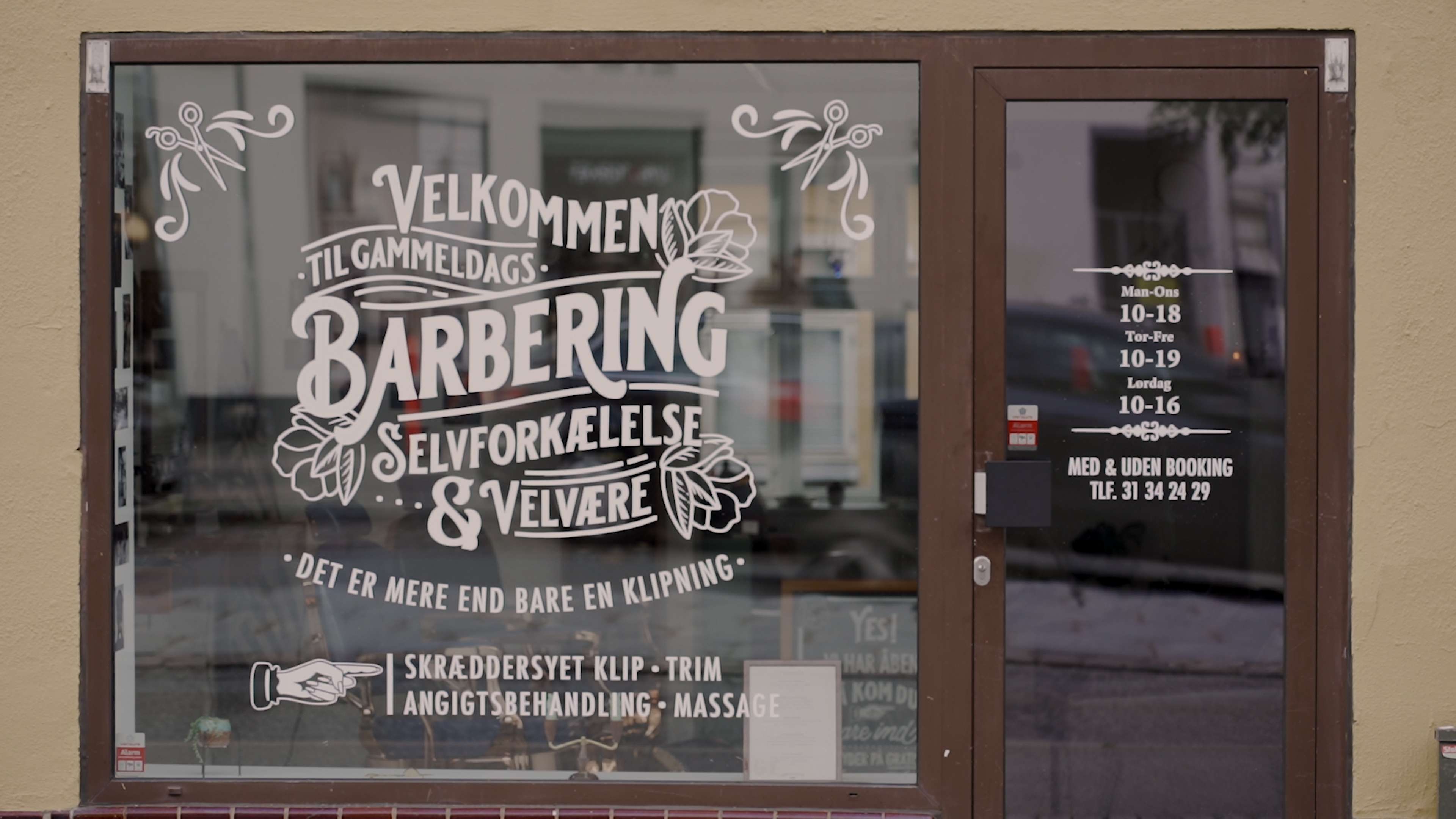
I regularly take an evening stroll through the streets of inner-city Aarhus. When doing so, I often experience myself peering enigmatically through the handsomely decorated shop-windows of the many newly opened barbershops in Aarhus, and there are many. I find myself pondering about the social interactions and cultural mechanisms unfolding within the confines of "the barbershop." Thus, conjecturing about the interior, the people, and the activities which make up these very peculiar and interesting places. I grew up with movies such as The Godfather, Scarface and various other male dominated mafia blockbusters in which the barbershop plays a pivotal role in the narrative as a place of secrets, gossip, and clandestine transactions. In the boiler-room of my imagination a story of organized crime, drugs, and anarchy is quickly conjured up, and a seductively orchestrated tale of heroes and villains is thus superimposed onto these very real non-imaginative persons, their livelihood, and onto the landscape of Aarhus through my – admittingly very lucid – imagination. Reflecting on this and realizing just how prejudiced and uninformed this imaginary performance were, I decided that I had to explore one of these social arenas in order to educate my ignorance.
One day, as I was walking home from work along Frederiksallé, my eyes caught a fleeting glimpse of a handwritten sign posted outside one of these recognizably decorate shop-windows. Something was different about this particular window and the interior shining onto the street. It was not exactly handsomely decorated but appeared more delicate and welcoming. My mind half asleep did not immediately notice what the sign read, the words just kind of amalgamated into the numbing oblivion of my tired body and brain. It was not till I had walked 100 meters or so further down the street, before an inner voice articulated a slightly contradictory message. What did that sign actually say? Driven by curiosity I found myself back at the sign, it read: Female Barber. My attention turned to the interior of the shop, where two smiling women were looking back at me. A large hand gesture which made her entire body convey the message, signaled me to enter the shop, inside the young woman, dressed in a Burberry checkered woolen coat, heartedly welcomed me. Walking through the door it felt very different to what I had imagined it would feel like to enter a barbershop. Easy-listening music was playing from a hidden Bluetooth speaker, a mix between Arabic rhythms and western composition, and a very delightful sensation of lavender in my nostrils made me feel calm and relaxed. Her voice drew me back into my body and the barbershop on Frederiksallé in Aarhus C: “Is there anything we can help you with?” A few minutes later, I had awkwardly explained what drew me back to their shop and if they would be interested in collaborating on a film project with me. After having described my background and motivations for asking this question in a bit more detail, the woman said: “We have actually been talking a lot about doing exactly this but didn’t know how to go about it. Now you walk in with this idea and it just feels like this is something that we should do together!”
Real vs. Imaginative
I expound on this arrival story in order to draw attention to and contextualize the phenomenological question of real vs. imaginative, as in the case of my biased or ill-informed notions of what goes on inside a barbershop. Imagination is an integral part of human consciousness, it allows us to interpret phenomena that is hidden or obscured by our ignorance or epistemic embeddedness within a particular cultural context, and thus, possibly outside our immediate comprehension, in novel, albeit sometimes misleading, ways. Bruce Kapferer writes in extension of Deleuze’s notions of Cinema and The Image, that consciousness “[…] is a refraction of reality, built from images and their light, the image being part of the matter of the real.” (Kapferer, 2013, p. 22). Thus, consciousness and the externally real – the image – are intrinsically intertwined, and this entanglement “becomes integral to subjected being and its reflexivity.” (Kapferer, 2013, p. 22). The image in Deleuzian terms enacts a sort of medium that carries with it the potential to actualize what he conceptualizes as a virtual, which is “[…] a place of indeterminate reoriginating intensity of pure potential […] that is yet to be actualized.” (Kapferer, 2013, p. 32). Hence, the image can be conceptualized as a representation of our imagination i.e. the image represents in part our subjected being and the act of imagining as the process of reflexivity, intrinsic to the subjected being. Imagination sometimes precedes, or actualizes the possibility of, the image, which in turn actualizes the externally real in a specifically ordered way. I argue that this process is much like Montage as described by anthropologists Christian Suhr and Rane Willerslev (2013). They contend that when editing and combining visual material, the end result is something more than the sum of the original pieces combined. Something new becomes evident, something emerges that was not initially visible. The argument they make is that by presenting visual material in the form of a montage, a window of opportunity arises, namely a chance for frontstage audiences (Goffman, 1990 p. 129) to experience or discover that there are elements in the material that are unobtainable or hidden from the viewer i.e. a gap between that which is seen and that which is experienced. The mind constructs notions of the externally real in very much the same way as the filmmaker constructs a narrative by juxtaposing different sequences of images. Extending on this notion, montage can be hypothesized as a method which emphases the point that what you see is not the whole picture. Instead of a transparent window, the surplus that is created when combining different audiovisual materials through montage, testify to the existence of something out-of-sight or entirely invisible to the viewer (Suhr & Willerslev, 2013, pp. 4-6). These enigmas are integral parts of the narrative framework. They help to push or guide the audience down a fixed path, and by directing the visual material through montage, the editor can distinguish and discard those elements that does not help to maneuver the audience’s experience in accordance with the narrative framework. Much like when I find myself conjecturing about the actually real when out on one of my evening strolls through the streets of inner-city Aarhus.
This short student film is a portrait of Dina, a young female barber originally from Iraq. She co-owns and runs a barbershop located on Frederiksallé in Aarhus C – Barberitta’s Little Place – together with her sister. Through the filmed interviews and conversations between myself and Dina, the film also develops as an expose of the shop, the relationship between the two sisters, and their notions of the good life (e.g. Jackson, 2013; Mattingly, 2014). In addition, this paper explicates in brief summary the personal motivations that initiated the collaboration between myself and Dina.
I regularly take an evening stroll through the streets of inner-city Aarhus. When doing so, I often experience myself peering enigmatically through the handsomely decorated shop-windows of the many newly opened barbershops in Aarhus, and there are many. I find myself pondering about the social interactions and cultural mechanisms unfolding within the confines of "the barbershop." Thus, conjecturing about the interior, the people, and the activities which make up these very peculiar and interesting places. I grew up with movies such as The Godfather, Scarface and various other male dominated mafia blockbusters in which the barbershop plays a pivotal role in the narrative as a place of secrets, gossip, and clandestine transactions. In the boiler-room of my imagination a story of organized crime, drugs, and anarchy is quickly conjured up, and a seductively orchestrated tale of heroes and villains is thus superimposed onto these very real non-imaginative persons, their livelihood, and onto the landscape of Aarhus through my – admittingly very lucid – imagination. Reflecting on this and realizing just how prejudiced and uninformed this imaginary performance were, I decided that I had to explore one of these social arenas in order to educate my ignorance.
One day, as I was walking home from work along Frederiksallé, my eyes caught a fleeting glimpse of a handwritten sign posted outside one of these recognizably decorate shop-windows. Something was different about this particular window and the interior shining onto the street. It was not exactly handsomely decorated but appeared more delicate and welcoming. My mind half asleep did not immediately notice what the sign read, the words just kind of amalgamated into the numbing oblivion of my tired body and brain. It was not till I had walked 100 meters or so further down the street, before an inner voice articulated a slightly contradictory message. What did that sign actually say? Driven by curiosity I found myself back at the sign, it read: Female Barber. My attention turned to the interior of the shop, where two smiling women were looking back at me. A large hand gesture which made her entire body convey the message, signaled me to enter the shop, inside the young woman, dressed in a Burberry checkered woolen coat, heartedly welcomed me. Walking through the door it felt very different to what I had imagined it would feel like to enter a barbershop. Easy-listening music was playing from a hidden Bluetooth speaker, a mix between Arabic rhythms and western composition, and a very delightful sensation of lavender in my nostrils made me feel calm and relaxed. Her voice drew me back into my body and the barbershop on Frederiksallé in Aarhus C: “Is there anything we can help you with?” A few minutes later, I had awkwardly explained what drew me back to their shop and if they would be interested in collaborating on a film project with me. After having described my background and motivations for asking this question in a bit more detail, the woman said: “We have actually been talking a lot about doing exactly this but didn’t know how to go about it. Now you walk in with this idea and it just feels like this is something that we should do together!”
Real vs. Imaginative
I expound on this arrival story in order to draw attention to and contextualize the phenomenological question of real vs. imaginative, as in the case of my biased or ill-informed notions of what goes on inside a barbershop. Imagination is an integral part of human consciousness, it allows us to interpret phenomena that is hidden or obscured by our ignorance or epistemic embeddedness within a particular cultural context, and thus, possibly outside our immediate comprehension, in novel, albeit sometimes misleading, ways. Bruce Kapferer writes in extension of Deleuze’s notions of Cinema and The Image, that consciousness “[…] is a refraction of reality, built from images and their light, the image being part of the matter of the real.” (Kapferer, 2013, p. 22). Thus, consciousness and the externally real – the image – are intrinsically intertwined, and this entanglement “becomes integral to subjected being and its reflexivity.” (Kapferer, 2013, p. 22). The image in Deleuzian terms enacts a sort of medium that carries with it the potential to actualize what he conceptualizes as a virtual, which is “[…] a place of indeterminate reoriginating intensity of pure potential […] that is yet to be actualized.” (Kapferer, 2013, p. 32). Hence, the image can be conceptualized as a representation of our imagination i.e. the image represents in part our subjected being and the act of imagining as the process of reflexivity, intrinsic to the subjected being. Imagination sometimes precedes, or actualizes the possibility of, the image, which in turn actualizes the externally real in a specifically ordered way. I argue that this process is much like Montage as described by anthropologists Christian Suhr and Rane Willerslev (2013). They contend that when editing and combining visual material, the end result is something more than the sum of the original pieces combined. Something new becomes evident, something emerges that was not initially visible. The argument they make is that by presenting visual material in the form of a montage, a window of opportunity arises, namely a chance for frontstage audiences (Goffman, 1990 p. 129) to experience or discover that there are elements in the material that are unobtainable or hidden from the viewer i.e. a gap between that which is seen and that which is experienced. The mind constructs notions of the externally real in very much the same way as the filmmaker constructs a narrative by juxtaposing different sequences of images. Extending on this notion, montage can be hypothesized as a method which emphases the point that what you see is not the whole picture. Instead of a transparent window, the surplus that is created when combining different audiovisual materials through montage, testify to the existence of something out-of-sight or entirely invisible to the viewer (Suhr & Willerslev, 2013, pp. 4-6). These enigmas are integral parts of the narrative framework. They help to push or guide the audience down a fixed path, and by directing the visual material through montage, the editor can distinguish and discard those elements that does not help to maneuver the audience’s experience in accordance with the narrative framework. Much like when I find myself conjecturing about the actually real when out on one of my evening strolls through the streets of inner-city Aarhus.